

- AI speeds up execution through ideas, drafts and summaries, but it doesn’t choose business direction.
- People define strategy; AI can’t set goals, understand audiences or choose measures.
- Better context improves suggestions, but it won’t remove the need for judgement.
- Human review protects trust by checking accuracy, originality, tone and audience conversations.
AI helps build a social strategy by suggesting platforms, content categories, schedules and posts. It can’t independently understand business priorities, customer context or nuanced brand judgement.
You’ll get results when AI handles planning while you set direction, approve content, manage conversations and learn from results.
Tools for social media management produce posts in seconds. That saves you time, but it doesn’t explain who you should reach or why.
A useful strategy connects goals, audience needs, channels, themes and measures. SocialBee’s free social media calendar template gives teams a practical starting point before they queue posts.
What AI Can Do for Social Media Planning
AI isn’t setting direction when it processes context and proposes options. Social media marketing tools can turn a brief into topics, captions, categories and posting times.
You’ll get better AI support when you provide objectives, audience details, budgets and brand rules. Google’s practical AI marketing guide offers direction, but strategy still needs human judgement.
Why AI Can’t Own the Social Strategy
AI doesn’t know which trade-offs you’ll accept. It can’t read an awkward customer moment, judge a sensitive trend or decide when silence is wiser than a scheduled reply.
It can also invent facts confidently. NIST calls this risk ‘confabulation’ and recommends checking sources. Teams shouldn’t skip originality, permissions or disclosure checks, including Meta’s AI information labels for some advertisements.
Build a Human-Led, AI-Assisted Social Strategy
Use this four-step process so decisions stay clear and production doesn’t become chaotic.
- Set the direction. You’ll need one goal, a clear audience problem, priority channels and no more than three useful measures.
- Give AI useful context. If you’ve got approved examples, customer questions, product facts, campaign limits and recent results, share them.
- Shape the content plan. You’ll want educational, conversational and promotional themes. Don’t copy drafts unchanged across platforms.
- Review and improve. Check facts, tone, links and visuals before publishing. Then answer comments and change what isn’t working.
SocialBee’s content pillars guide helps teams organise recurring themes, so they don’t make every post feel the same.
How SocialBee Copilot Supports Planning
Among social media management platforms, SocialBee’s Social Media Copilot uses business details to suggest platforms, content categories, a posting plan and editable posts. It’s a planning partner, not the strategist.
In SocialBee’s LinkedIn strategy guide, Andra describes using Copilot to suggest ideas from her goals, then rewriting every draft in her own voice. That’s human-led use in practice.
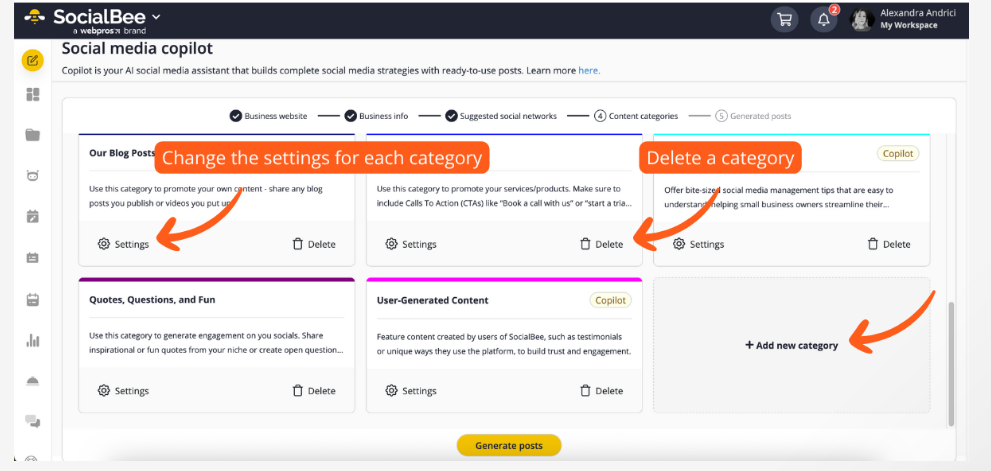
Try Social Media Copilot when you’re ready, using a brief. Don’t publish every suggestion. Remove ideas that don’t fit, adjust the voice and approve only accurate content. The social marketing tool saves time without taking over accountability or audience relationships.
Build a Smarter Social Media Strategy with Human Direction
Marketing tools for social media remove busywork, but they don’t replace direction. You’ll get options from AI; your judgement protects accuracy and trust. Test the approach with SocialBee’s 14-day free trial.
Frequently Asked Questions
Yes, AI can draft a strategy, but it can’t confirm your priorities. You’ll need to approve goals, audiences and constraints.
You’ll need to provide objectives, audience details, brand rules, approved examples and recent results. AI shouldn’t have to guess.
AI can follow your documented tone, but it won’t always recognise nuance. You’ll need to edit every draft before publication.
Strategic decisions, fact-checking, sensitive replies and final approval shouldn’t be automated. People must handle conversations requiring empathy or context.
Track the original goal so you’ll know whether results are improving. Compare engagement, traffic, enquiries, conversions and consistency over time.